ServicesFillings
Fillings in Ashland, MA
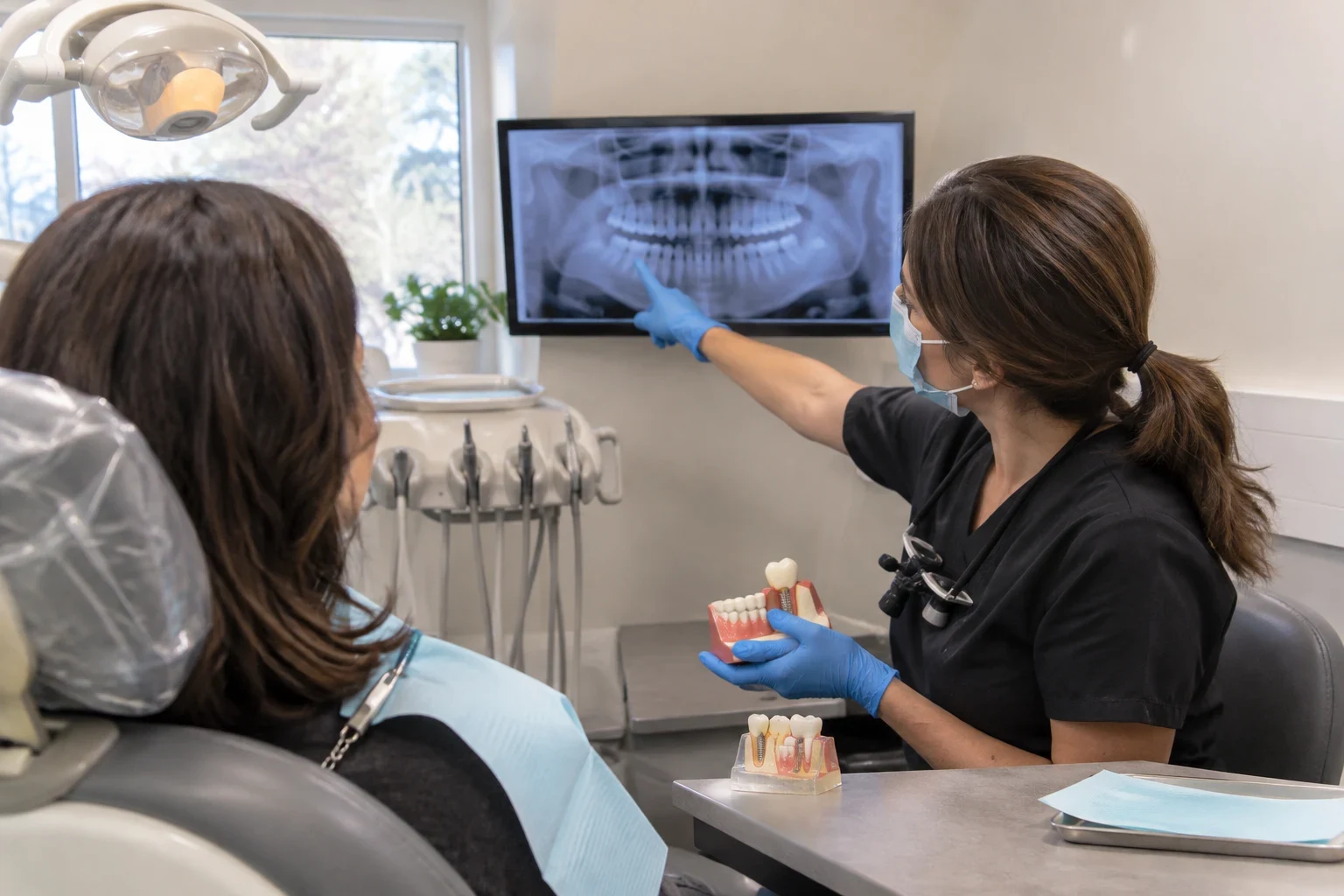
Caught early, a cavity is a small fix, but it will not go away by itself. We find the decay, point it out on your x-ray and give you the price first. Then we rebuild the tooth with a resin shaded to match the teeth around it.
How a filling works and when it fits
Decay creates a soft, weakened area in the tooth. We clear out that damage and rebuild the tooth with composite resin that bonds to the sound enamel around it. That seal stops bacteria from pushing further in toward the nerve.
Fillings suit small and medium cavities when most of the tooth is still sound. If decay has gone too far or the tooth is cracked, a filling may not hold, and we'll tell you before you agree to anything. In those cases a crown is often stronger, and our Crowns & Bridges page explains how they differ.
In over 11 years of practice, one lesson stands out. Patients want to hear the cause, the cost and their options before any work begins. That's how every filling visit here starts.
What comes with a filling visit
- 01
Exam and x-ray of the tooth
We check the tooth and take an x-ray when it's needed. Decay between teeth is often visible only on the image.
- 02
A straight answer first
We show you our findings, how many teeth need work and how soon each one should be done. You learn the cost and the likely insurance share before we start.
- 03
Numbing so you stay comfortable
The area is numbed, so you notice pressure rather than pain. If dental visits make you anxious, let us know and we'll slow down and check on you often.
- 04
Composite that matches your teeth
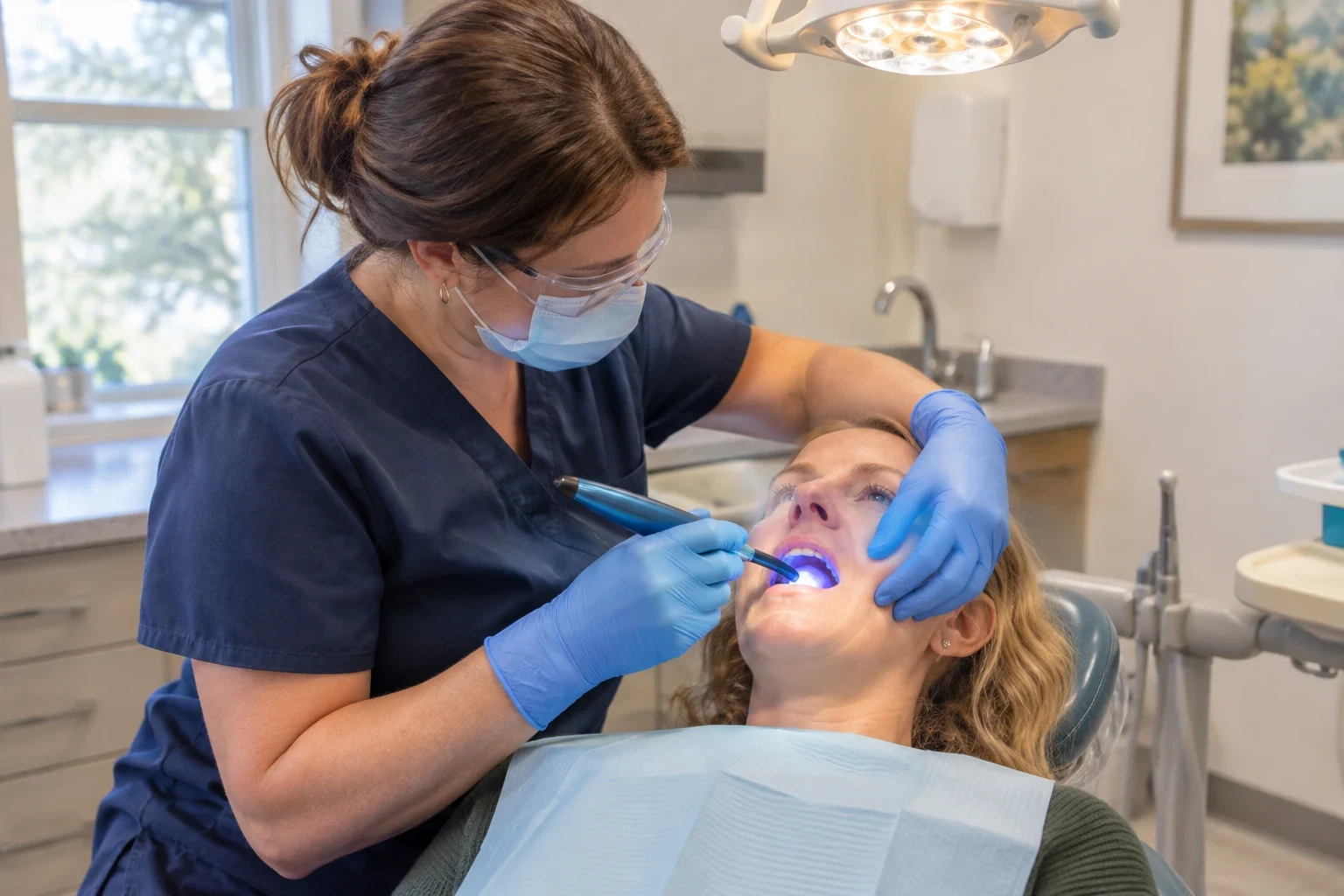
We match the resin to your tooth color and set it with a blue curing light. It blends in on front teeth and stands up to chewing on back teeth.
- 05
Swapping out old silver fillings
Metal fillings can crack or leak around the edges and let fresh decay start beneath them. When one is failing, we can remove it and put in composite.
- 06
Checking your bite at the end
We shape and polish the filling, then ask you to bite on marking paper. Even a slightly high filling can leave the tooth sore, so we adjust until it feels natural.
Questions about Fillings?
Call(508) 449-9463When a tooth may need filling
A twinge from cold or sugar
A quick sharp zing from ice water or sweets often means decay has made it through the enamel. It's usually an early clue.
A dark spot or small pit
A darkened groove on a back tooth could be stain or could be decay. Only an exam can tell which.
Food getting stuck in one spot
If floss keeps shredding or food keeps packing between the same pair of teeth, a cavity or broken edge could be behind it.
It hurts to bite
Sharp pain when you chew may come from a cavity, a crack or a worn-out old filling. Get it looked at before it grows.
A chip or rough edge
Minor chips can usually be built back with the same composite we use for cavities. Larger breaks may need more.
What happens at a filling visit
- 1
Check and explain
We examine the tooth, go over any x-rays and show you what we found. Nothing begins until you decide.
- 2
Numbing
A numbing gel goes on first, followed by the local anesthetic. We wait until the tooth is completely numb.
- 3
Clearing the decay
We remove only the damaged area and save as much healthy tooth as possible. A smaller cavity means a smaller filling.
- 4
Layer, shape and harden
The composite goes in thin layers, each set with the curing light. Then we shape it to fit your bite.
- 5
Final check
We test the bite, smooth rough spots and polish. A single filling usually takes less than an hour, and you can drive home afterward.
What sets the price of a filling
We need to see the tooth before giving a fair figure, because the cavity's size and spot drive most of the cost. After the exam, you get a price for each tooth before we begin. We take most dental insurance plans. Without coverage, the Office Dental Plan is one choice, and the CareCredit Patient Payment Plan lets you pay over time.
- Size of the cavity
- Fillings are priced by the number of tooth surfaces involved. A small spot on one side costs less than one that reaches across two or three.
- Which tooth it is
- Back molars are tougher to reach and carry the heaviest chewing load, which can add chair time and material.
- How many teeth
- Several cavities on one side can often be done in a single visit. We tell you which need care now and which can wait.
- Your plan's share
- Most plans pay something toward fillings, though some pay less for tooth-colored material on back teeth. We check your benefits and estimate what you'll owe.
Filling questions patients ask us
Does getting a filling hurt?
Once the tooth is numb, most people feel pressure and some vibration, not pain. The injection is a quick pinch, and we put a numbing gel on first to soften it. If anything feels sharp while we work, raise your hand and we stop right away.
How long will I be numb afterward?
Plan on two to four hours, depending on which tooth and what anesthetic we used. Hold off on eating until the feeling returns so you don't chew on your cheek or tongue by accident.
Can I eat right after a composite filling?
Yes. The material is fully set before you leave the chair. Some cold sensitivity for a few days is normal and should settle down on its own.
How many years will my filling hold up?
That comes down to how large it is, which tooth it is on and whether you clench or grind. A small filling, kept clean and checked regularly, can stay in good shape for a long time. We look at every filling during your Exams & Cleanings visits so wear gets caught before it causes trouble.
Why would you recommend a crown instead of a filling?
If decay has taken out a big share of the tooth, a large filling can put stress on the thin walls left behind and crack them. A crown covers the whole tooth and holds it together. We only bring it up when the tooth truly needs it, and we point out the reason on the x-ray.
Do you fill cavities for children too?
Yes. We see kids and adults, and we slow things down to keep younger patients calm. Our Kids' Dentistry page explains how we handle first visits and baby teeth.
Get that cavity looked at
Small cavities are the easiest and least costly to fix. Give us a call and we will set up a time to check the tooth and talk through your options.