ServicesCrowns & Bridges
Crowns & Bridges in Ashland
Teeth crack, large fillings give out, and sometimes a tooth gets lost. We examine the tooth, walk you through the x-ray, and tell you plainly whether a crown or bridge is the right fix, what the visits involve and what drives the price.
What a crown or bridge actually does
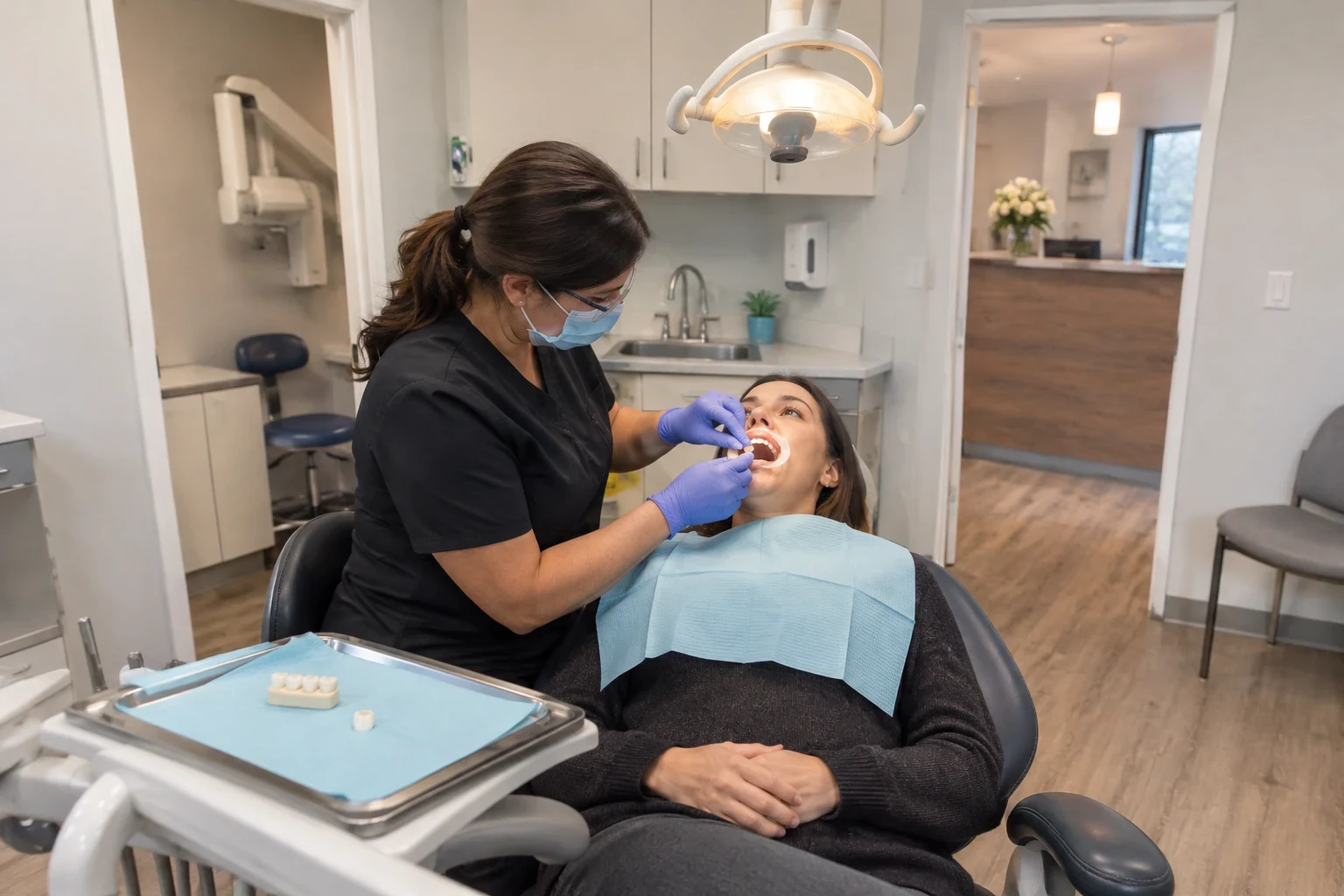
A crown fits over a damaged tooth like a cover, wrapping everything above the gumline. We reach for one when a tooth is too cracked, worn down or full of filling to stand up to chewing by itself. It keeps the tooth in one piece so you can use it again.
A bridge fills the space left by one missing tooth, or sometimes a few. A replacement tooth is joined to crowns that sit on the teeth at each end of the gap. It is cemented in for good. You brush it and clean beneath it, but it never comes out.
Plenty of teeth do fine without one. When a filling is enough, we say so. We have been in practice over 11 years, and a big part of that is knowing when a tooth is better left as it is.
What your treatment covers
- 01
Exam and x-rays to begin
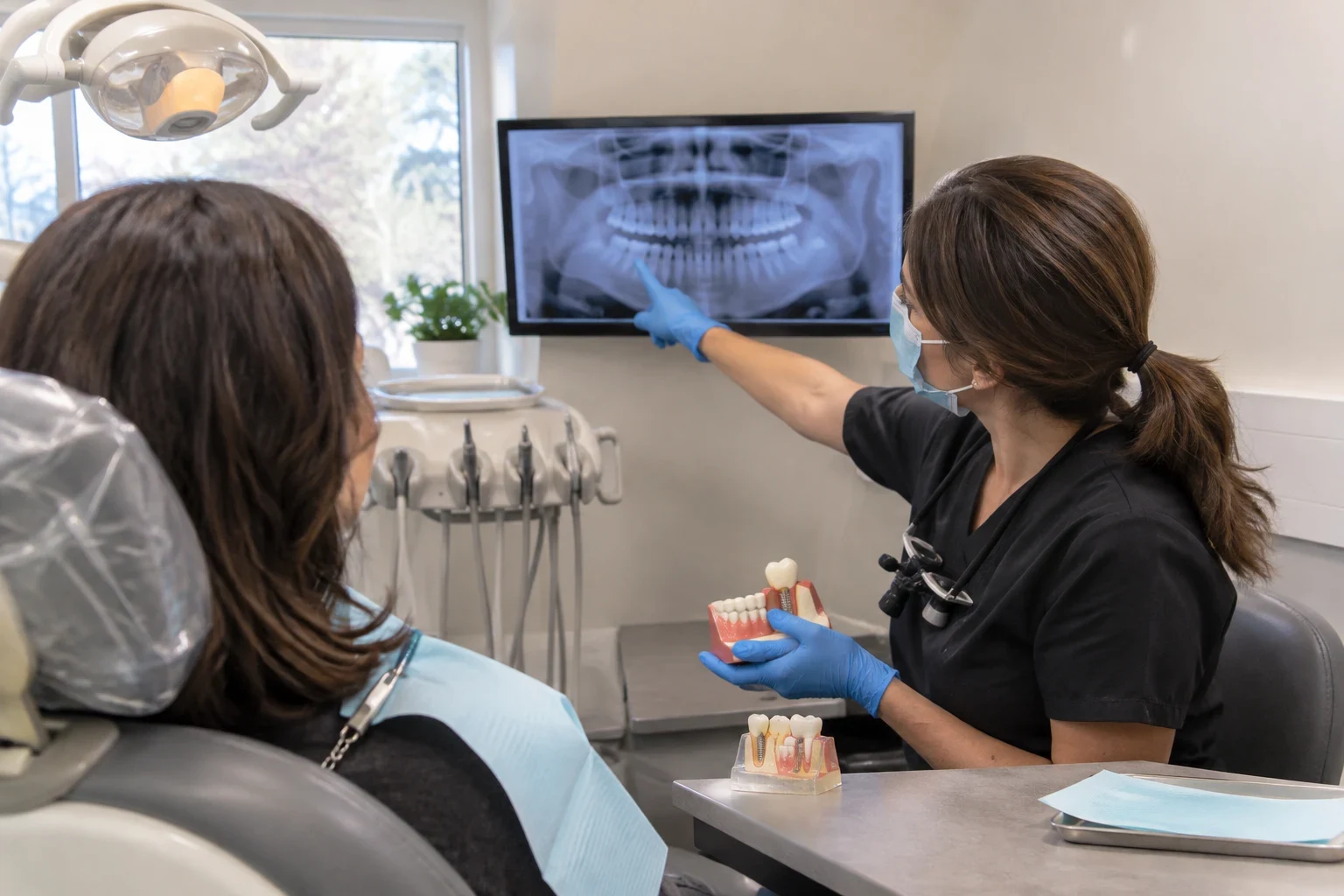
We examine the tooth, test the bite and take x-rays of the root and surrounding bone. The images go on screen so you can see them too.
- 02
A plain recommendation
We tell you if the tooth needs a crown, a bridge, a filling or no work yet. When more than one choice makes sense, we compare them for you.
- 03
Getting the tooth ready
With the area numb, we clear out decay and old filling material and shape the tooth for a close fit. If not enough tooth remains, we rebuild it first.
- 04
Impressions and color matching
We scan or take an impression of the tooth and the ones beside it, and pick a shade that matches your other teeth.
- 05
A temporary cap
A temporary covers and protects the tooth while the lab makes your permanent crown.
- 06
Fitting and bite adjustment
We check the edge at the gumline, adjust the bite until it feels right and cement the piece in.
Questions about Crowns & Bridges?
Call(508) 449-9463When a crown or bridge may help
Sharp pain on biting
A brief jolt when you bite down and let go often points to a crack. A crown holds the tooth together so it stops flexing, which helps keep the crack from spreading toward the root.
A large filling that won't stay put
A filling that fills most of the tooth leaves only thin walls around it. Those walls break off, and the filling comes loose again.
A tooth that's broken or worn short
Clenching, a past injury or biting something hard can leave a tooth too small or fragile to chew with.
An empty space where a tooth was
Teeth next to a gap slowly tilt into it, and the opposing tooth can drift. The way your teeth meet changes along with them.
An older crown that seems off
A dark edge at the gumline, a rough spot or food trapping under it can mean the seal is failing and decay is getting in.
Your visits, step by step
- 1
Exam and plan
We check the tooth, take x-rays and go over our findings. Before you book anything, you get a written plan with the costs spelled out.
- 2
Preparing the tooth
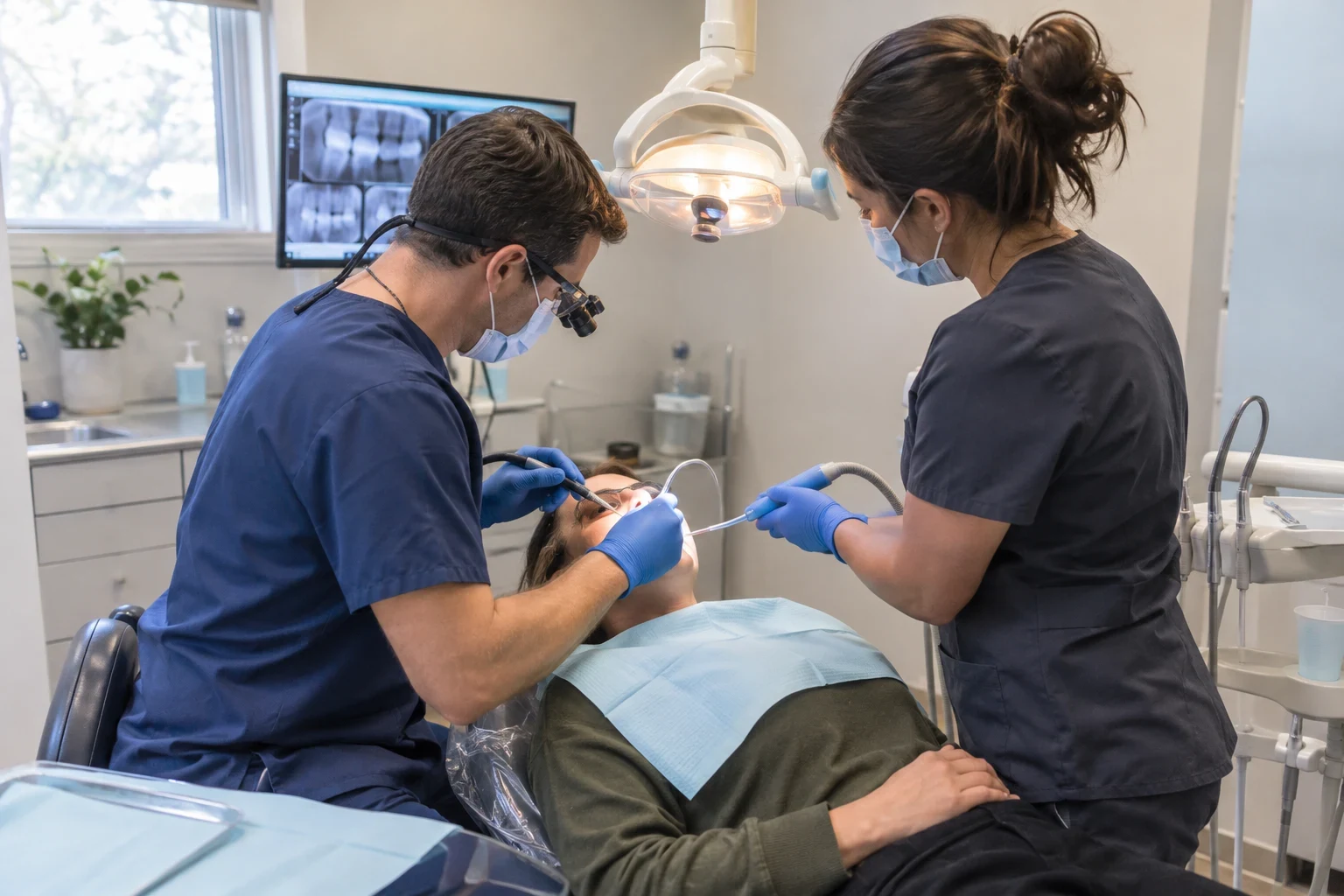
After numbing, we shape the tooth, take impressions and fit a temporary crown. For a bridge, both teeth beside the gap are prepared in the same appointment.
- 3
Time in the temporary
The lab builds your permanent crown or bridge, usually in about two weeks. Until then, avoid sticky or very hard foods on that side.
- 4
Seating the final piece
We take off the temporary, test the new piece for bite and color, then cement it in. Most patients chew normally again the same day.
What moves the cost
A crown or bridge does not have one fixed price. It comes down to what your tooth needs and the material we use. Before any work starts, we walk through every line of the estimate with you so your share is clear.
- Material
- All-porcelain, zirconia, porcelain fused to metal and gold each carry a different cost. A front tooth usually needs to look natural. A back molar needs strength first.
- How much tooth is left
- When decay or old filling material leaves too little to anchor a crown, we rebuild the core first. If the nerve is affected, it needs treatment before the crown goes on, and you hear about that before anything is scheduled.
- Number of units
- Each piece of a bridge counts on its own: the two anchor crowns and the false tooth between them. A wider gap needs more pieces.
- Insurance and payment
- We accept most dental insurance plans, and plenty of them pay toward a crown. You can spread payments out with the CareCredit Patient Payment Plan. No coverage at all? Ask us about our Office Dental Plan for patients without insurance.
Common questions about crowns and bridges
Will a crown be painful?
We numb the tooth before shaping it, so you notice pressure rather than pain. Some tenderness for a few days afterward is normal, and over-the-counter pain relief usually takes care of it.
How many years will a crown last?
With good care, many hold up ten years or longer. Grinding, crunching ice and missed cleanings cut that short. Decay can still start at the crown's edge, so keep brushing and flossing.
Would a filling work instead?
It can. When enough sound tooth remains to support a filling, we recommend that first. When the walls are thin or cracked, a filling is likely to break again, and a crown makes more sense.
How do I keep a bridge clean?
Slide floss under the false tooth using a threader or floss with a stiff tip. We demonstrate at your fitting, and after a little practice it takes about a minute.
Is it okay to leave a gap empty?
You may notice nothing at first. Over months and years, the neighboring teeth can lean in and the tooth above or below can drift. Chewing gets harder, and a bridge can become tougher to fit down the road.
Does insurance pay for a crown or bridge?
Plenty of plans pay a portion, usually as a major service that may have a waiting period or yearly cap. We look up your benefits and give you your expected share before treatment.
Get the tooth looked at
A cracked tooth usually gets worse, not better. Book a visit, we will take a look, and you will leave knowing your options and what each one costs. We see patients from Ashland, Framingham, Holliston and nearby towns.